"An 'aching' what?" you will now be asking. To which I point to your own sense of Yearning. Yours, mine, all of ours. Our Yearnings. How seldom it is that we hear (if, indeed we ever hear) any mention of
yearning. The word conjures the absolute sense of that always present yet silent and unassuming vacuum within that wants, endlessly, for filling. David Keirsey in his wonderful work "
Please Understand Me" (particularly the book 2) artfully presents, in his explanation of our "“values", the YEARNING facet of our total BEING.

"“Why" you may ask "“is this attention to individuality so important that you continually insist that we are repeatedly revisit it?" I am so glad that you asked. The importance (in part) lies in the necessity of avoidance of a malady that plagued me through my first forty years. Here I will present, for your consideration, the idea of preventing the debilitating nemesis: YEARNACHE. That'’s right! The all-encompassing aching that has its roots in the absence of fulfillment of Ones individual aspect ... Yearning. Hence, I am, hereby and forevermore, coining the never-before-known Yearnache to establish an identity for a naturally recurring reality in my life (and, I might add, something that I have recognized in the lives of many, many others all about me over the years.)
You see, each of us has, as a major influence on our inborn value systems, a knowable and predictable Yearning element. The fact that such a consideration is not a part of our daily transactional vocabulary (nor is it something that we even know how to address inwardly) leaves the matter unaddressed (most often for the entire duration of our lifetimes.) Thus, it is my absolute conviction that we are, most likely, apt to live lives of, not only unsatisfied but also, unidentified Yearnings. We are presented with social, cultural, religious, family, and moral standards by which we are taught to establish and measure our Desires. But far too often we are left (after satisfying those commonly accepted and recognized Desires) with an empty and sadly unsatisfied sense that we are not, somehow, complete.
Most often the answer to our sense of dissatisfaction is provided in the assessment of that 'wonderful' (NOT), guilt inducing charge of "Self-Centered-ness." "“So you are feeling unhappy, then just get over yourself"” I oft hear repeated. Herein lies the rub.
Your Self is just exactly who You are supposed to be. Your Self is the individual identity with which you were wondrously created. And, my dear Reader and all-enduring Friend, your Yearnings are a valuable, integral part of the completeness ... the totality of ... You. (And the same is most assuredly true of each Child, whose development and nurturing, is the responsibility of each of us, with whom that child has even the briefest of contact.)
We can be attuned to each other'’s yearnings and make an effort to encourage and strengthen or, by default, leave that Yearning to wither and produce a 'Yearnache' in the Spirit of the other. To the end that we do not do that ... please allow me to introduce you to the four basic Yearning Identities. From there it is my hope that you will; first, recognize and honor your own Personal Yearning ... then grow to respect and edify the yearnings of those presented, by Life, to You.

Where do yearnings play in the business of the orderly stratagem of providence? I understand it to be generally accepted that the seventy-six percent majority of all of us humans are fairly equally divided into two camps.
Thirty-eight percent of the
Concrete Thinking world yearns to
make an impact while seeking
constant stimulation. The other half of this empirically functioning group yearns for
belonging and is motivated by a
quest for security. The former were referred to, by Aristotle, as the Hedonics (Artisan). The latter he called the Proprietary (Guardian).
Of the equally divided
Abstract Thinkers (the remaining twenty-four percent of the Population), one half Aristotle knew as the Ethicals (Idealist) while the other half were, to his thinking, the Dialecticals (Rational). The Ethicals (Idealists) are driven by a yearning for
idealized love best defined as romance, while seeking
Identity in their lives. Dialecticals (Rationals) yearn for
Achievement and are compelled to seek it in
knowledge. While the labels for these four (the Hedonic, Proprietary, Ethical, and Dialectical) have been revised by many who have studied them over the millennia, there has been a consistency of definition and a concurrence in the interpretation of their respective natural traits.

I think it highly unlikely that we will have a natural comfort level with Friend Aristotle's terms of identity in our own day-to-day contemplation's. Being the image-oriented creature that I am, I find it more workable for me to relate the divers types to people who exemplify their types.
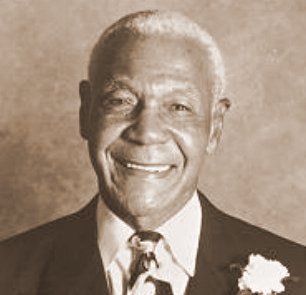
Truman (the concrete thinking/ Guardian/ Proprietary) said:
"I never give them [the public] hell. I just give them the truth, and they think that it is hell."
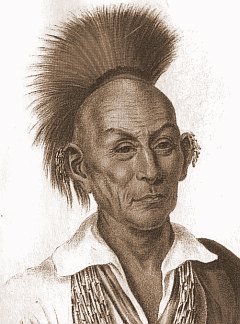
Churchill (the concrete thinking/ Artisan/ Hedonic) gave us:
"“In war: resolution. In defeat: defiance. In victory: magnanimity.
In peace: goodwill."”
It was
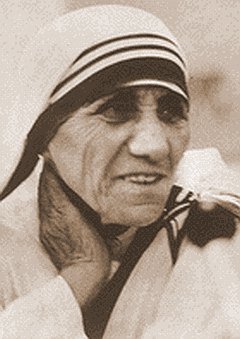
Gandhi (the abstract thinking/Idealist/ Ethical) who said:
"“Freedom and slavery are mental states."”
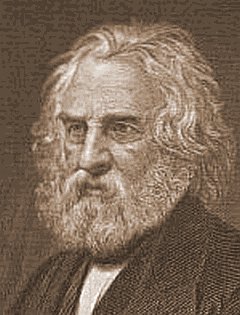
And the consummate abstract thinker; the Rational/ Dialectical
Einstein left us his:
"“Science without religion is lame, religion without science is blind."
Perhaps relating your thinking to these so-well-known figures will make the consideration of the four types more agreeable to you ... such is my hope. So, to summarize (I do enjoy the exercise of replaying the '“tape'” to reinforce the image.) We have:
*
Einstein - the Dialectical/ abstract thinking/ Rational who yearned for
achievement and was compelled to seek it in knowledge. His happiness came in a life of logical investigation. [12% of us]
*
Gandhi - the Ethical/ abstract thinking/ Idealist who yearned for idealized love (romance) in his world while seeking identity for himself and his people. He found happiness in the employment of moral virtue. [12% of us]
*
Churchill - the Hedonic/ concrete thinking/ Artisan who yearned to make an impact while seeking constant stimulation. His happiness was derived from sensual (visual, auditory, taste, tactile, and aromatic [cigar smoking not excluded]) pleasure. [38% of us]
*
Truman - the Proprietary/ concrete thinking/ Guardian who yearned for belonging as a responsible "“member in good-standing"” of his society while pursuing his quest for security. His happiness was centered on the acquisition of assets (to include honors, position, and authority.) [38% of us]

I take considerable comfort in the obvious significance of each of these types to the history of our world. (You will, no doubt, note my frequent reference to terms of "
“comfort" or "“
comfortable"” in my writing. For, My Friend, it is to this state that I seek to guide you; first, in your mind, and then in your life. Your recognition of; acceptance of; embracing of; then (ultimately)
comfort with ... your SELF.) No credit, acclaim, respect, admiration, or honor can be legitimately taken away, from any of the exampled individuals, for their non-conformance to any set of measures, based on someone else'’s set of "“norms"... nor from You (with your own unique Personhood.) They each played a part of great consequence in the symphony of history.
You and I have our own part to play in this, our life'’s 'composition'. I smile to consider the irreplaceable tone of a singly struck Triangle in the midst of an orchestra'’s performance of a great work. So small the instrument. So limited the time of implementation. Yet the effect on the listening sense of the audience makes the musical experience whole. I encourage you to "strike a note" on the Instrument of your Uniqueness and enhance our shared experience of Life's Symphony with the resonance of ... YOU.
Vive la difference (YOUR difference)
IMAGES Through the gracious courtesy of
Ian Britton, FreeFoto.com